USCG Free Vessel Safety Check

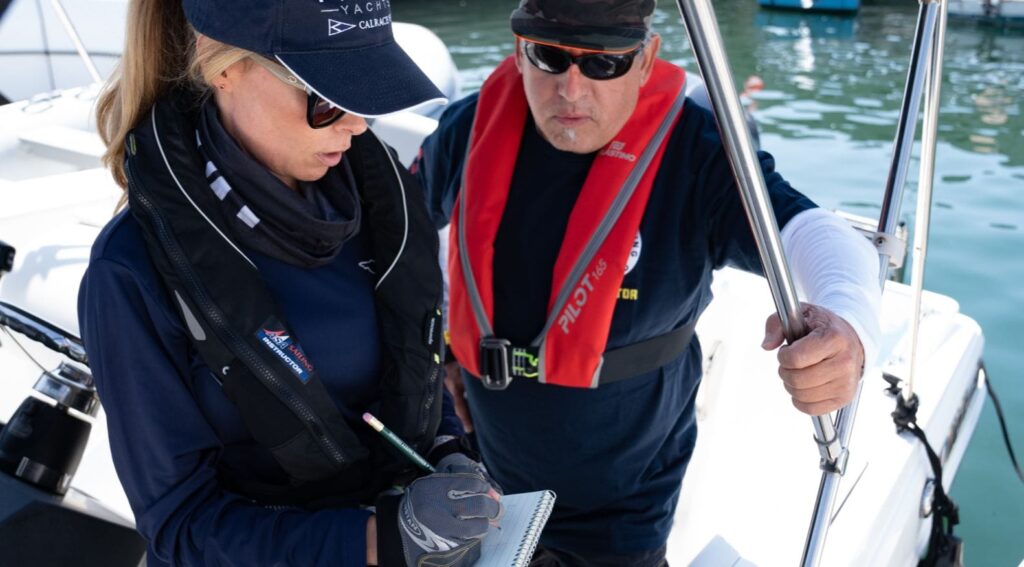
This Year, Why Not Be Safe – Get a Free Vessel Safety Check
BY WAYNE SPIVAK, US COAST GUARD AUXILIARY
For boaters of all ages, and for all size vessels, the safety of your family and friends who boat with you should be all important. What better way to know that your vessel has all the appropriate safety gear than with a Vessel Safety Check (VSC)?
Whether you’re a PWC user or a sailor, powerboater or kayaker, the US Coast Guard Auxiliary provides free Vessel Safety Checks for all non-commercial boaters (there are also programs for uninspected passenger vessels and commercial fishing vessels).
A Vessel Safety Check is a courtesy examination of your boat (vessel) to verify the presence and condition of certain safety equipment required by State and Federal regulations. The Vessel Examiner is a trained specialist and is a member of the US Coast Guard Auxiliary. They will also make certain recommendations and discuss certain safety issues that will make you a safer boater.
This is not a boarding or a law enforcement issue. No citations will be given as a result of this encounter. We will supply you with a copy of our evaluation so that you may follow some of the suggestions given. Vessels that pass will be able to display our distinctive VSC decal. This does not exempt you from law enforcement boarding, but you can be prepared to make this a positive encounter.
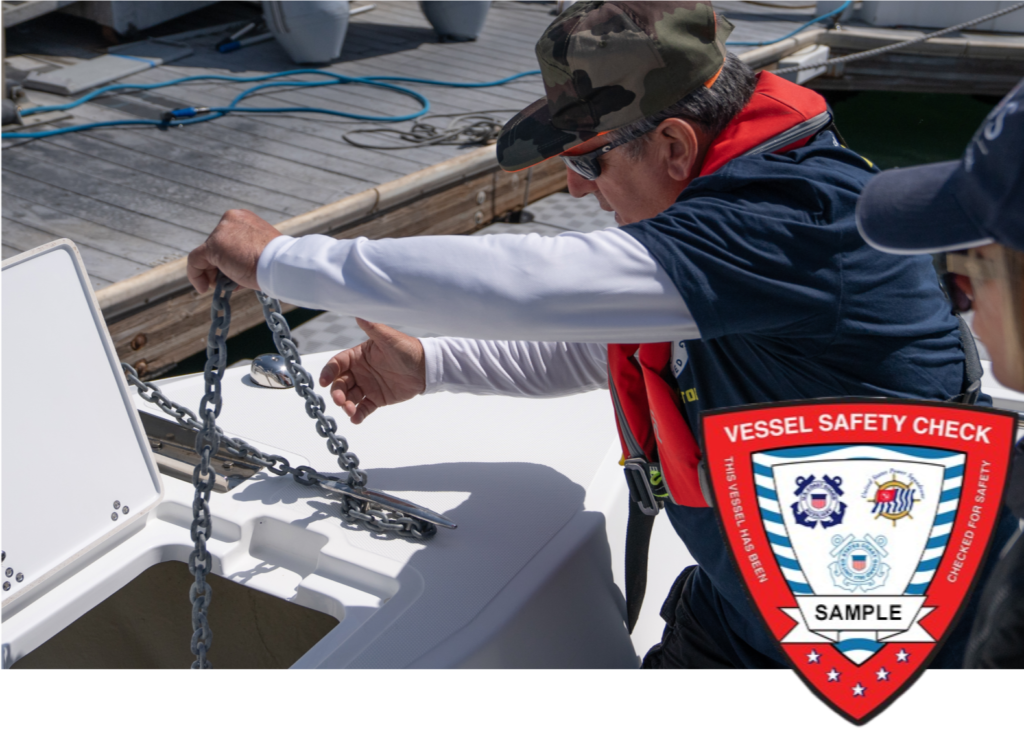
Here are suggestions to speed you along to getting the coveted VSC decal:
- Have your registration or documentation papers handy.
- Make sure your PFDs (personal flotation devices) are in an accessible location and not in the original plastic bags!
- Make sure your visual distress devices (flares, orange smoke, and other pyrotechnic devices) have not expired. Pyrotechnic devices have a three (3) year shelf life.
- Make sure your fire extinguishers are a) fully charged, b) sufficient in numbers and types for your vessel, and c) appropriately attached per the label (to be USCG Approved).
- Make sure your horn works, and if your boat requires it, you have a bell.
- Check your navigation lights. Many times the bulbs blow.
- Boats 26 feet and over require a Pollution and MARPOL placard. Many times you can get them for free at area marinas and boat stores.
- Vessels over 39.4 feet require a copy of the Rules of the Road (COLREGs).
How do you get a Vessel Safety Check? Visit the USCG Auxiliary National Vessel Safety Check website: http://cgaux.org/vsc/.